Critiquing Photo Challenge

Descriptive- Susanna

Explanatory- Susanna

Interpretive- Jo Ractliffe

Susanna-
Aesthetically Evaluative
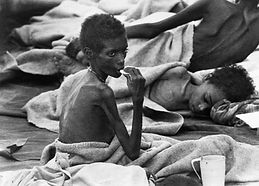
Ethically Evaluative-
Karim Lebhour

Theoretical- Jazmin Blog
Descriptive: My photograph of my wrist is descriptive because it's sole purpose is to show the bones of my forearm and wrist, enabling the Physician to evaluate the condition of my wrist.
Explanatory: My photograph is explanatory because it shows the correct way to hold a golf club when playing golf/mini golf.
Interpretive: This photograph by Jo Ractliffe is interpretive because it uses black overalls hanging from trees by a string as props, leaving the interpretation of the image up to the viewer.
Aesthetically Evaluative: My photograph is aesthetically evaluative because its purpose is to highlight the beauty of the back roads near my house.
Ethically Evaluative: This photograph by Karim Lebhour is ethically evaluative because it captures the harsh reality of starving and malnourished children in other countries in hopes of promoting awareness of this issue.
Theoretical: This photograph by Jazmin Blog is theoretical because the photographer arranged matches to resemble two people fighting that are surrounded by a crowd.
Multimodal Presentation
Gordon Parks was born in 1912 in Kansas and believed that photography could serve as a powerful weapon to raise awareness about social justice. His work primarily focused on themes such as race relations, poverty, civil rights, and urban life. Much of his photography is both aesthetically and ethically evaluative. He uses a variety of compositions and lighting techniques to develop stronger images that promote powerful messages for the viewer to interpret. Through Parks visual storytelling, Parks ensures that each image resonates deeply, leaving a lasting impression on the viewer.
Reviewing Gordon Parks’ work changed my perception of photography. I came to understand that photography is not just about capturing a moment. It's about telling a story, revealing hidden truths, and confronting injustice. His images are filled with emotion, purpose, and social context. Parks used photography as a form of activism, showing how a single image can influence thought and inspire change. His work has motivated me to see photography not just as an art form, but as a powerful tool for impact.